Beyond the ring, a good donut case in Indian Trail holds a second cast of characters, each with its own dough, its own frying behavior, and its own opinion about car rides. Donut holes, crullers, and fritters confuse first-time buyers because the names describe shapes in some cases and recipes in others. Work through this checklist in order, shape, dough, filling, travel, and you will be able to read the extended case like a regular.
Reading the extended case, in order
- Donut holes: the cut-out centers of yeast or cake rings, fried small; yeast holes are puffy, cake holes are dense, and both are sold by the handful.
- French cruller: a ridged ring of choux pastry, the same family as eclairs; feather-light, eggy, and best eaten the same day before it softens.
- Cruller, cake style: a twisted or ridged cake donut, denser than the French version, with crisp edges that hold glaze well.
- Apple fritter: chopped apple and cinnamon folded into yeast dough, fried as an irregular patty; the benchmark for a substantial, shareable donut.
- Bearclaw and twists: shaped yeast doughs, often filled or sugared; twists travel well, filled shapes are messier in a hot car.
- Long john and bismarck: bar and round yeast shells built for filling; check whether filling is cream, custard, or jelly before you buy for a group.
How each one is made
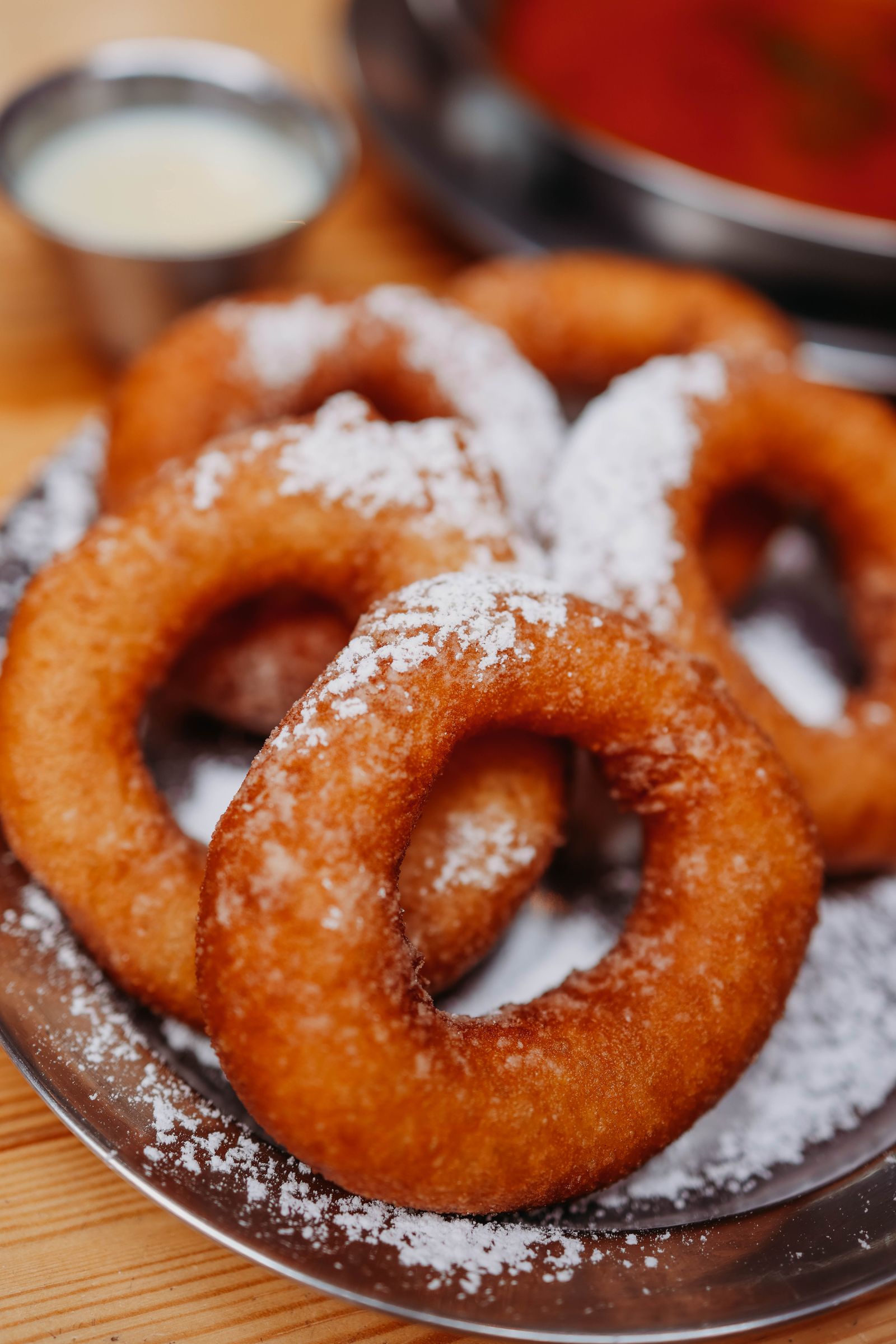
Holes are the honest by-product of ring making, fried because wasting dough makes no sense and because a warm handful of them might be the best value in the case. Crullers split into two unrelated items sharing a name: the French cruller is piped choux that puffs with steam and fries into a crisp, hollow-ridged ring, while the cake cruller is a formed cake donut with a firmer bite. Fritters are the improvisers of the case, yeast dough folded with fruit and spice, portioned roughly, and fried until the edges caramelize into crags.
That roughness is a feature. A fritter's uneven surface gives more crisp edge per bite than any ring, and its size, often two servings pretending to be one, makes it the natural share item. In a Piedmont summer, fritters and cake-style items also hold up best in transport, since their density forgives a warm car ride that would slump a delicate cruller.
Which ones travel, which ones don't
For a box headed to an office or a ball field, choose holes, cake crullers, twists, and fritters. They stack, they wait, and they taste right at room temperature hours later. French crullers should be eaten soon after purchase, filled items should ride flat and cool, and anything with a glossy glaze wants a short trip in warm weather. Buying for a crowd, mix one travel-proof anchor with one delicate item to be eaten first, and tell people which is which.
At The Donut House, as at any shop, the case rewards a question. Ask which fritter batch has apple in it this week, whether the cruller is French or cake style, and what just fried. The extended case exists for regulars who ask exactly that.
Ordering the extended case for a group
For a group, the extended case solves problems the ring case cannot. Holes portion themselves for a classroom or an office kitchen where nobody wants to commit to a whole donut. A fritter anchors a small box, giving it weight and a shareable centerpiece. A few French crullers, bought for the people who will eat in the car on the way home, deliver the delicate item at its only real moment. Build the box in that order: sturdy base, portionable filler, one fragile treat per person who is present now rather than later. Tell the counter the plan in one sentence and they will pack it in the right order, fragile items on top, heavy fritters below, so the box arrives looking like the case it left.
One last rule covers the whole extended case: ask what is in it today. Fritters change with available fruit, filled shapes rotate, and cruller styles vary by baker. The case you see on Saturday is not a fixed menu, and the question takes five seconds.
Common questions
Are donut holes really the centers of rings?
Yes. They are the cut-out middles, fried and sold instead of wasted. Yeast holes are light and puffy, cake holes are smaller and denser.
What is the difference between a French cruller and a cake cruller?
A French cruller is choux pastry, crisp and almost hollow. A cake cruller is formed cake batter, dense and sturdy. They share a ridged look and little else.
Which donut is best for a long drive?
Fritters, cake crullers, twists, and donut holes travel best. Save French crullers and filled donuts for eating soon after you buy them.
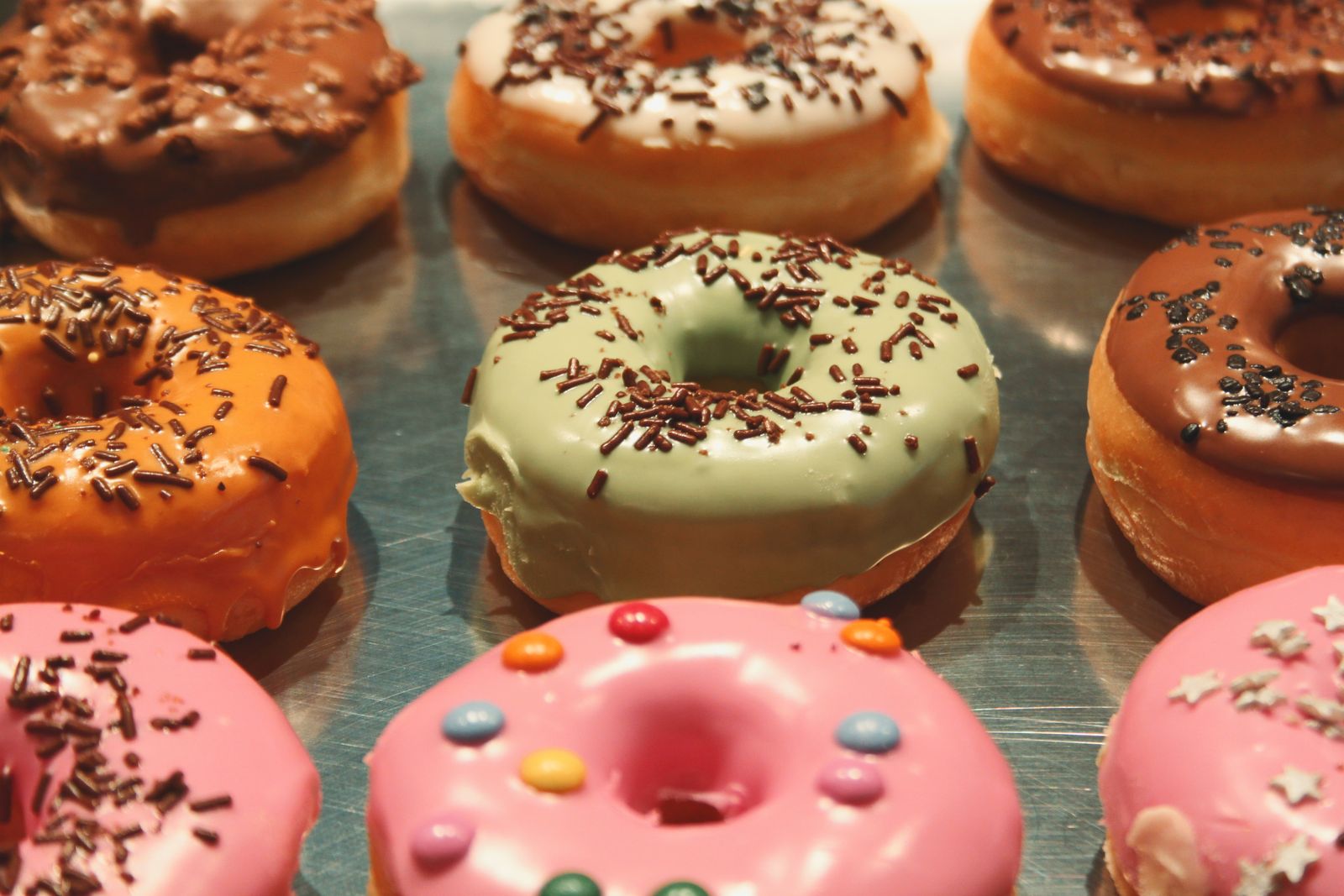
Photos in this guide are representative stock images.
← All guides from The Donut House← Back to The Donut House