Walk into a donut shop in Indian Trail for the first time and the case divides into two families that look similar and eat completely differently. One is light, puffy, and tears like a dinner roll. The other is dense, tender, and crumbles like a slice of cake, because that is essentially what it is. Cake donuts and yeast donuts start from different recipes, rise by different means, and fry on different schedules, and knowing which you prefer ends the guesswork at the counter.
Two batters, two leaveners
A yeast donut begins as a dough: flour, water or milk, sugar, butter, eggs, and living yeast. It is mixed, kneaded, and left to ferment, and the yeast produces the gas that makes it rise. A cake donut begins as a thick batter leavened with baking powder and baking soda, the same chemistry that lifts a birthday cake. No yeast, no kneading, no long ferment. The leavening happens in the fryer, when heat activates the powders and the batter puffs as it cooks.
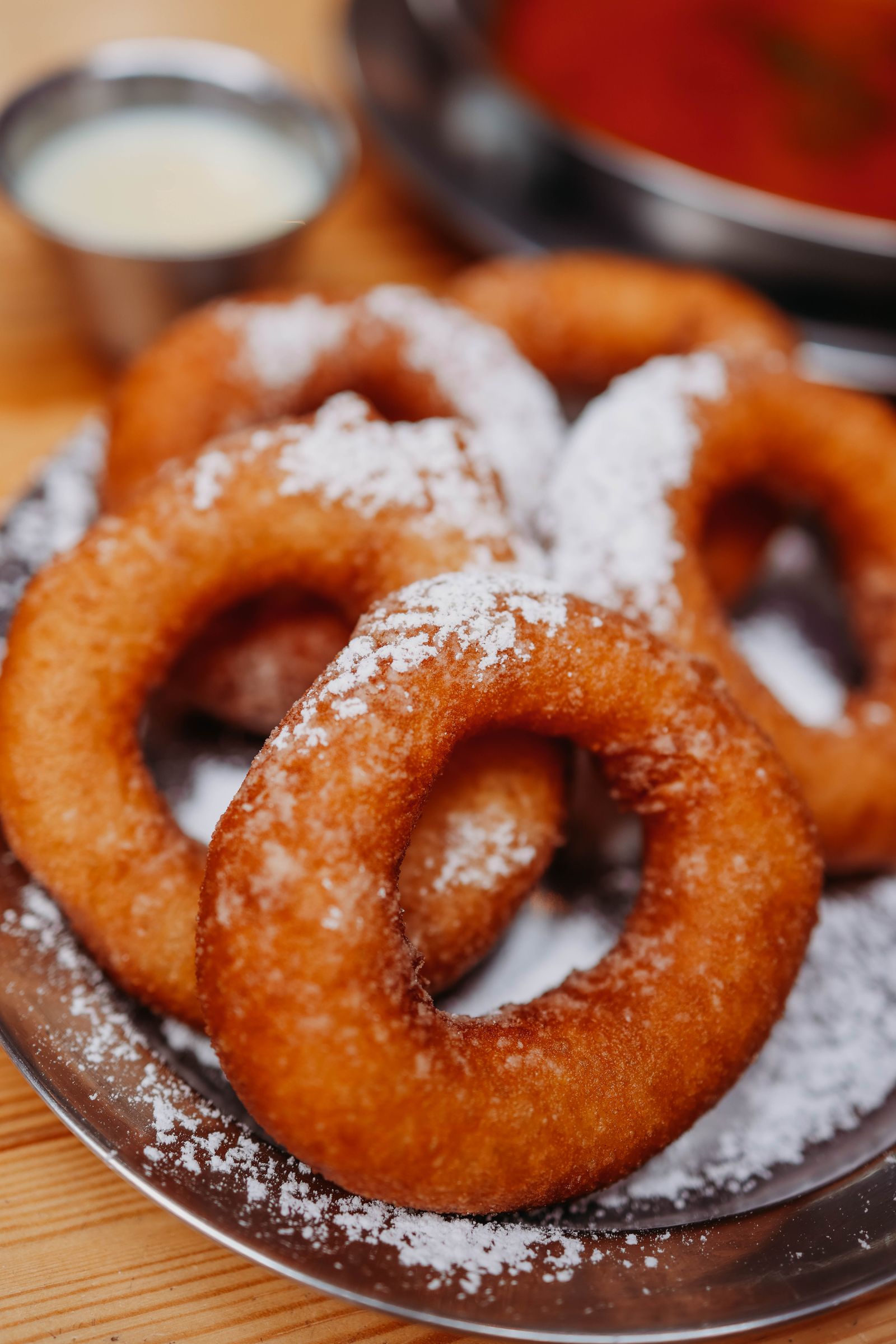
That single difference drives everything else. Yeast dough is elastic and can be rolled and cut into rings. Cake batter is too soft to roll, so it is piped or dropped through a cutter straight into the oil, which is why cake donuts often have those craggy, cracked surfaces that hold glaze so well.
- Mixing: yeast donuts start as a kneaded dough; cake donuts start as a thick, spoonable batter.
- Rising: yeast dough ferments for an hour or more and is proofed again after cutting; cake batter rests only briefly.
- Shaping: yeast rings are rolled and cut; cake donuts are deposited by machine or hand cutter directly over the fryer.
- Frying: both fry in hot oil around 350 to 375 degrees, yeast donuts a bit longer per side for their larger size.
- Finishing: yeast donuts take glaze best while warm and smooth; cake donuts hold powdered sugar, cinnamon, and thick frostings on their rough surface.
- Eating: yeast donuts are best within hours; cake donuts, denser and lower in moisture loss, hold their texture into the next day.
Texture is the tell
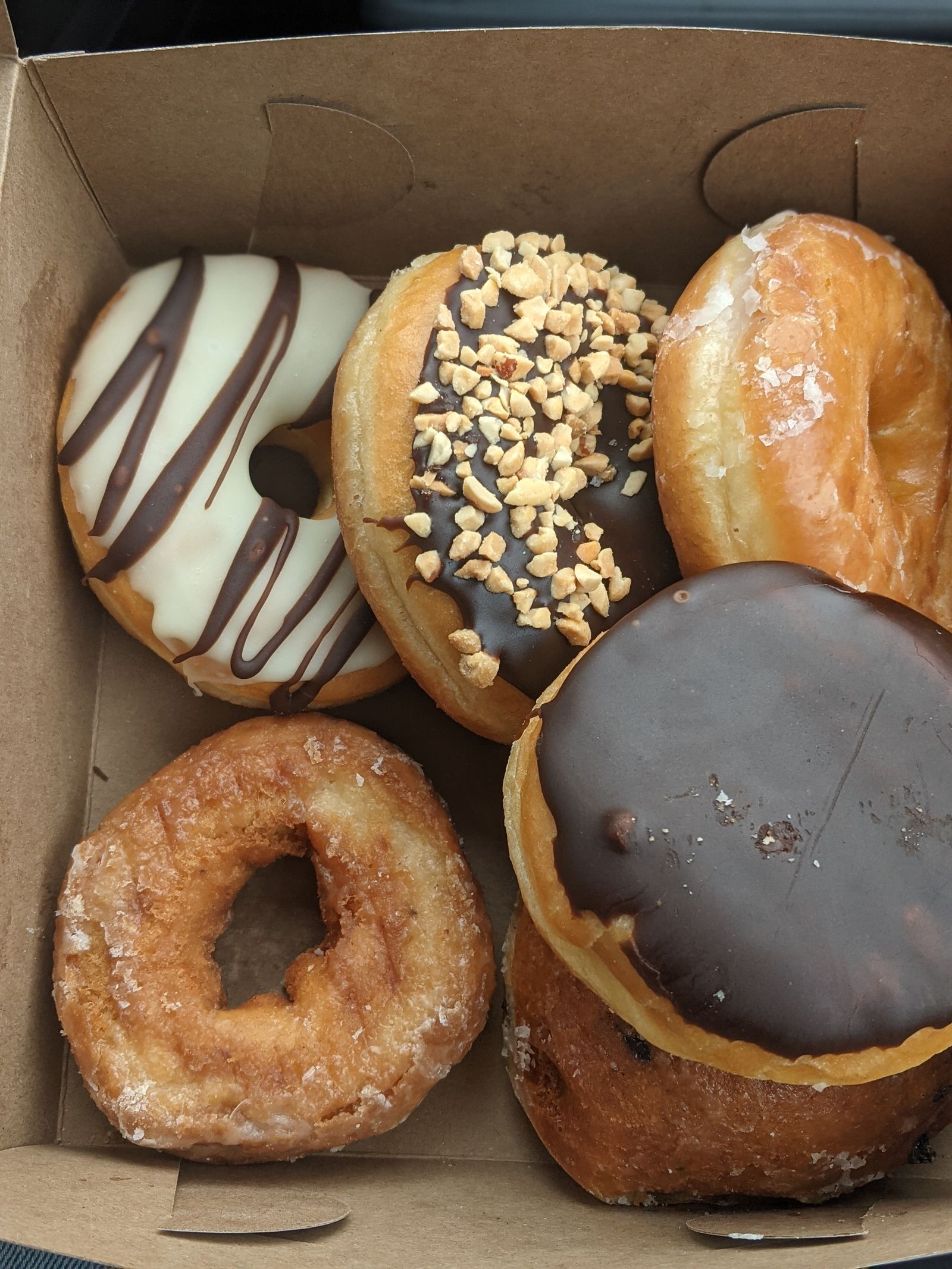
Bite a yeast donut and it compresses, then springs back a little, with a mild chew and an airy interior full of uneven holes. The classic glazed ring is the purest example. Bite a cake donut and it breaks cleanly, with a fine, moist crumb and a slightly crisp exterior edge, especially the old-fashioned style with its split, crunchy ridges. Neither is better. They are different foods sharing a shape and a fryer, and most regulars at The Donut House are loyal to one family without having ever named why.
Fillings follow the divide too. Yeast shells, puffy and hollow-friendly, carry jelly and cream fillings. Cake donuts are almost never filled; their dense crumb leaves nowhere for filling to go, so they wear their flavor on the outside or mixed through the batter, as with blueberry and spice cake styles.
Why shops fry before dawn
Yeast is the reason for the early hours. Dough mixed at opening time would not be proofed, cut, proofed again, and fried until mid-morning, so shops start the dough hours before the doors open and fry in batches as the case needs them. Cake batter, with no fermentation, is the flexible half of the case: it can be mixed and fried in smaller batches through the morning, which is why a fresh cake donut at nine is a realistic hope while the yeast rings were mostly fried at dawn.
Ordering a mixed box with intent
Now the practical payoff. A mixed dozen built with the two families in mind beats a random assortment: yeast rings and filled shells for eating immediately, cake donuts for anyone taking theirs home or saving one for the afternoon. Tell the counter who the box is for and when it will be eaten, and a good shop will steer the mix without being asked twice. At home, keep the families in mind again at serving time. Warm the yeast donuts for a few seconds if an hour has passed, serve the cake donuts at room temperature, and put the filled ones out first, since their clock runs fastest of all.
Common questions
Which donut stays fresh longer, cake or yeast?
Cake donuts hold up better into the next day thanks to their dense crumb. Yeast donuts are at their best within a few hours of frying and stale faster.
Are cake donuts healthier than yeast donuts?
Not meaningfully. Cake donuts can absorb a bit more oil due to their surface, but both are fried treats in the same general range, portion matters more than type.
Why are old-fashioned donuts cracked on top?
The batter and frying method make the surface split and crisp as it cooks. Those ridges are intentional, and they hold glaze and sugar especially well.
Photos in this guide are representative stock images.
← All guides from The Donut House← Back to The Donut House